
A story primarily has the following elements: characters, setting, plot and timeline. As children listen to stories being read aloud, they make associations with the story elements and relive them through play. They make up stories in free play, during conversations or during pretend play. Interestingly, they not only retain the cognitive memory of the events in the story, but also remember the emotions in the story, and those of the adults as well who read the story out loud. This is the absorbent mind of the child that is open to all inputs and takes in everything presented to it in its immediate environment. Hence the prepared environment, appropriate materials and the emotional state of the adult play a vital role in educating the child. Research shows how even technical subjects like mathematics and sciences can also be assimilated better by older children if they can create story associations with the concepts. Further, the story framework is now recognised as a memory-enhancing tool for all ages. Hence, carefully curated books and a playful association with a toy, read aloud by a caring adult are a recipe for exceptional child development. The adult can later witness how beautifully the child recreates the knowledge and emotions that he has absorbed. The child could express his learning through a playful engagement with the toys that are associated with the book and the entire experience of read-aloud.
Importance of Storytelling in Early Childhood Education
Visual storytelling has been around since Stone Age cavemen were drawing on the walls. A story can be considered as a framework for the entire human consciousness to function. Humans are story people. We live stories, stringing events of our lives into plots. We imagine stories, even create our past as a story, and project stories into our future too! Stories have been told in all human civilisations from antiquity as depicted by the wall paintings of the Stone Age. Our country, the ancient land of Bharat, has a rich heritage of visual storytelling from the ancient past. Archaeological remains in Indus Valley civilisations show toys made of clay, cloth, wood and stone. Dance, drama, sculpting, temple wall carvings, calendar art, rangoli, painting, Ramlila, puppetry, street plays, anthropomorphic religious depictions, bhajans, festivals and art in many other diverse ways is a testament to creative storytelling in this culture. We have stories in Vedas, Puranas, and Upanishads that tell stories of creation itself and also about the various deities that populate our ethereal spheres! Our two biggest epics, Ramayana and Mahabharata, are the grandest stories ever written on the lives of Shri Rama and Shri Krishna, two incarnations of Lord Vishnu. Culture is passed down over generations in the form of stories woven into the tapestry of our lives. Grandparents and living celebrations narrating these cultural stories are as ubiquitous in India as the stars in the night sky.
Vygotsky and John Dewey on Learning
Lev Vygotsky (1934, 1978) was a Russian philosopher and psychologist who proposed his now famous Sociocultural Theory. It states that cognitive development is influenced by cultural and social factors. A child does not learn in isolation but in a cultural and social context. He emphasised the role of social interaction in the development of speech and reasoning in children. Learning, as described by Vygotsky is ‘meaning-making’, which is a macro concept, not subject-specific. For example, while a student is exploring a particular topic, he is also at the same time picking up on problem-solving, social cues, belief systems, values and communication. Collaborative and cooperative learning, scaffolding and reciprocal teaching are some of the terms associated with the Sociocultural Theory. John Dewey (1859-1952) was an American philosopher, psychologist, and educational reformer who, like Vygotsky, also spoke about learning in a social construct. He considered imagination crucial to drive thinking and learning forward. For that teachers have a great role to play in providing opportunities for students to engage in the playful exploration of possibilities in the classroom.
Play-Based Learning
Play-based and inquiry-based learning has gained traction worldwide with classrooms changing orientation from students sitting on desks facing the teacher to a more cooperative fluid environment, where students can move and explore different materials and ask questions. The Venn diagram above shows the roles that students and teachers can play in such an environment to maximise explorative learning. There is scientific evidence available now that suggests play-based learning as the best way to learn, as it promotes cognitive, social and emotional growth. Dr Radhika Kapur, in her 2019 paper titled Pedagogical Approaches In Early Childhood Education writes about the importance of play-based, activity-based, theme-based and inquiry-based pedagogical approaches to learning in early childhood education. She highlights the need for teachers and schools to adopt new scientific ways of designing the curriculum and lesson plans, which she terms an emergent curriculum. She writes, “Emergent curriculum is referred to as the philosophy of teaching and a way of planning of the curriculum that puts major emphasis on being responsive to the needs and requirements of the students and create meaningful learning experiences for them. Under NEP 2020 guidelines, Early Childhood Care and Education (ECCE), has given a set of proposals to bring modern theories and practices to enhance learning in early childhood education. The guidelines hint at better materials, activity-based learning, teacher training and doing away with the exam-based model in favour of developing language and cognitive skills through observation and play.
Self-development and Education
Dr Kamlesh Patel (Daaji), born in 1956, a Padma Bhushan awardee, is a global leader and guide of Heartfulness. His inspirational vision of education is extremely child-centric. He says that as teachers and parents, our role is to let children discover interests and help them develop the power of observation and inquiry from an early age. Adults play the role of gentle guides who provoke observation and thinking rather than only feed existing knowledge to the child. How we talk to the child matters, piquing her curiosity, and respecting her need for self-discovery. Daaji goes on to say that in addition to the materials and prepared environment, the state of mind of the adult matters the most. Are we as adults calm and poised, and do we have the patience to wait for the child to discover on her own? Self-development of the caregiver is equally important. The free-spirited adult who is a learner himself will naturally guide the child towards exploration. Hence, investment in training and self-development of teachers is an important criterion for schools and colleges. A happy parent makes a happy child, likewise, a happy teacher makes a happy student. Teachers need to be aware of theories in education, child development and child psychology, apart from their subject matter. They also need to work on developing the attitudes of patience, active listening, encouragement, experimentation and questioning to be able to guide the students in that direction. Students learn by observing rather than by being told what to do.
Indian Perspectives on Education
Shri Rabindranath Tagore (1861-1941), the famous poet and philosopher from Bengal, wrote, “Knowledge without action is worthless.” He did not find favour with the examination-based system of education. Instead, he looked at education as an exposure to the reality of life, nature, our needs and culture. What we learn we should be able to act upon it. That not only hones the learning but changes it into a lived experience. This kind of learning can happen when the children enjoy the freedom to learn as per their interest, at their own pace, and can observe the phenomena practically. Once having assimilated the learning in this way, then they set out to express it in creative ways using hands-on approaches. Further, Rabindranath Tagore emphasised holistic learning, where physical fitness, intellect and morals are all given their due. Self-development and service (action) were the cornerstones of his philosophy. Shri J Krishnamurthi (1895-1986), philosopher, speaker, and writer, said, “Teaching is not the mere imparting of knowledge but the cultivation of an inquiring mind.” Krishnamurti Foundation follows his pedagogical vision of enhancing awareness in oneself and others through asking questions and taking action. Children while at play are exploring the environment through the senses, engaging with it, and then expressing their understanding in unique ways. One child might choose to build, another child might want to create a story or draw, and yet another child might want to engage in a playful conversation; all these are examples of action by the child propelled by his inquiring mind.
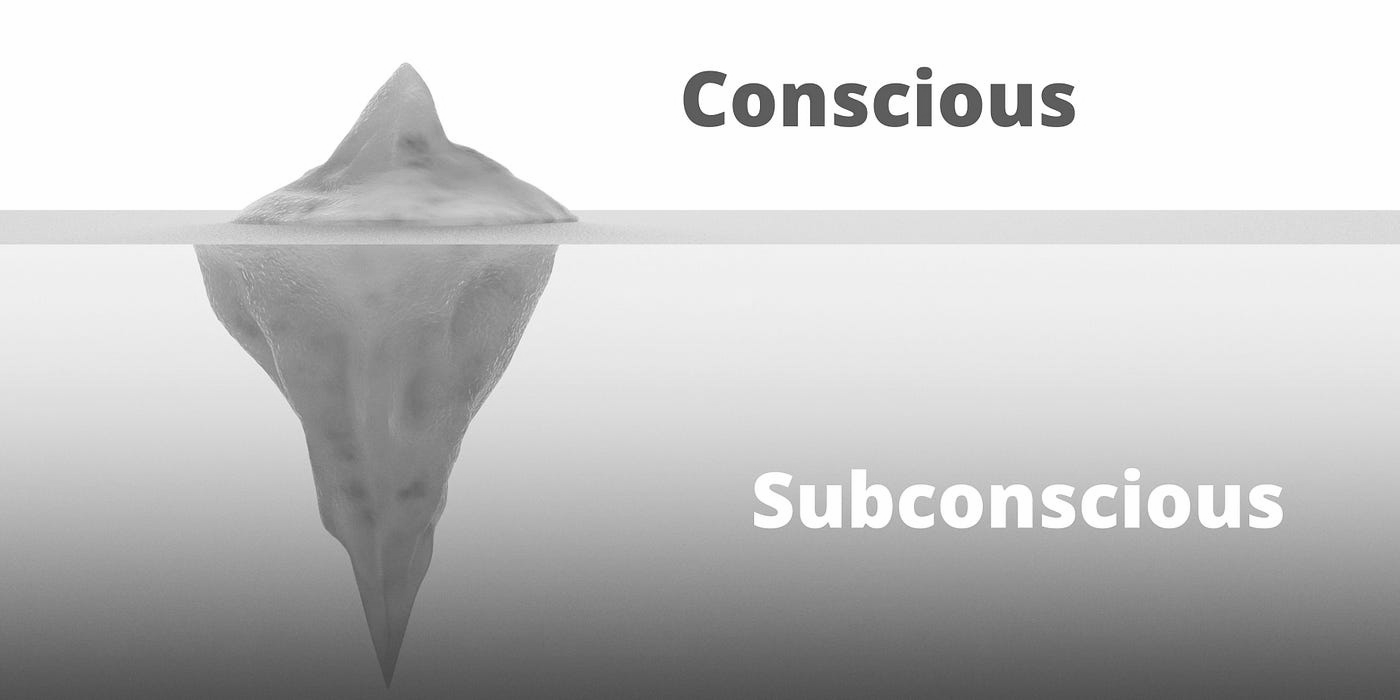
The Subconscious Mind
Psychology talks about the subconscious mind that learns by absorption and repetition. The subconscious mind is that part of our mental apparatus that is active 24/7 but not immediately available to conscious awareness. If the conscious mind is analogous to present moment focussed attention then the subconscious would be the peripheral awareness that absorbs everything from the environment but does not need immediate attention. However, it affects thoughts, feelings, and behaviour without entering the awareness, sometimes called tendencies or impressions. The subconscious imprints condition the conscious mind. Hence, in education, materials, environment, behaviour and subtle thoughts and feelings also matter, as the child’s mind absorbs everything. Here too, we see the importance of the environment and free play in child development. Especially in early childhood when the rational thinking and discriminative faculties of the conscious mind are not yet developed, the environment becomes the all-encompassing source of learning. The cognitive development theory developed by Jean Piaget (1896-1980) in the early 20th century is quite interesting. He is quoted as saying, “You cannot teach concepts verbally, you must use a method founded on the child’s activity.” The child’s activity is nothing but play and free exploration. Children like to create stories while playing, which we generally term as pretend play, however, the child through his play assimilates and expresses what he has learnt from the environment. Jean Piaget’s theory proposes that a child goes through four distinct phases of cognitive development: This theory goes to show how education and learning if aligned with the natural cognitive developmental stages can help the child immensely. In terms of books and toys, keeping the cognitive requirements at each stage will help produce the right kind of material for different age groups. Play and self-discovery are still at the core of each stage.
Play in Early Childhood Education: Montessori Method
Dr Maria Montessori (1870-1952), an Italian doctor turned educator writes in her book The Absorbent Mind, “The absorbent mind of the child orients itself to the environment so it is necessary to prepare the environment what much care.” The prepared environment that Dr Maria Montessori talks about is multifaceted; it encompasses the layout and arrangement of the room, placement of carefully designed materials, methodology to use the materials and a caring teacher. Each of these elements is important as they influence the learning and development of the child in profound ways. The Montessori approach looks at classroom learning that fosters independence, self-paced learning and choice-making. It says that children have an innate interest in learning and adults can facilitate that by carefully organising the classroom with a multitude of materials of the child’s interest. How the teachers present the material, show the child different ways to explore, and then ask questions. The child finds it easier to become an independent self-explorer who is confident in his ability to investigate in such a suitable environment. This kind of engagement which is self-paced and free-flowing is called play. In this scenario, books and toys play a big role in bringing various concepts alive while fostering play. In the context of storytelling or read-aloud to younger children, the prepared environment would include the arrangement of room, seating, choice of books and toys, and a teacher who is keenly aware of and also honours the child’s need for discovery and self-expression through play. It is a well-known fact now that from birth through approximately the age of six, the young child experiences a period of intense mental activity that allows the child to ”absorb” learning from his or her environment naturally and spontaneously without conscious effort. Language development is a tangible example of this process. A child picks up his mother tongue just by exposure.
